Monday - March 5th, 2012
This activity helps to make students more aware of the divergence of pronunciation and spelling in English. In order to do the crossword, they must be able to think of the word as a sequence of sounds rather than as a sequence of letters. More pronunciation ideas?
Monday - March 5th, 2012
This is a short mystery story in two parts. The questions challenge students to imagine or deduce what happened. The story was inspired by the Roald Dahl tale The Landlady, and I first wrote it for New Ways to Go 4 (CUP).
Sunday - March 4th, 2012
This is a short murder story, with a note taking activity. The story is rich in past simple passive, and there is an extension activity to focus on this language point. There are audio downloads in case you want to make this into a listening activity rather than reading.
Each level of English Result is accompanied by a Teacher’s Book which provides full and detailed teaching notes.
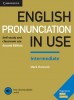
In 2017 English Pronunciation in use got a new look. The new cover design comes along with a new approach to audio - instead of being on a set of four audio CDs and a CD-ROM, the audio is now a free online download. This makes the whole package much more affordable and is published alongside the 2012 second edition of this best-selling pronunciation title, already in full colour and with a new section on understanding fast, authentic speech.
English Result Intermediate is designed to take a strong A2 level learner to B1 or B1+ on the Common European Framework of Reference (CEFR) scales. The core syllabus (see Resources bel
New Ways to Go is a 4-level coursebook for Spanish secondary schools. Levels 1 and 2 were written by Penny Ur, Ramón Ribe and Mark Hancock.
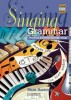
There are 18 units in the book, each concerning a different aspect of grammar. For each unit, there are photocopiable pages - one for the song, one of practice exercises and one which is a game.
In Pen Pictures 3, pupils are encouraged to add their voice to what they write. They present opinions and make complaints, and begin to look at formal and informal language.
Thursday - January 12th, 2012
Students look at a picture and try to describe it from memory. They listen to a poem and relate it to the picture. Then they read the poem and decide on the points of view in each verse.
Pages