The 4th International Conference on English Pronunciation: Issues and Practices is being hosted by the Institute of Phonetics, Charles University, Prague, this weekend. This conference happens every two years, with previous venues including France, South Africa and Spain. See a programme for the event here.
I can’t remember ever having seen so many pronunciation-focused talks on an IATEFL programme as there were in Manchester this year. Too many to fit into a single PRONSIG strand day. What’s more, many of them were so over-subscribed that there wasn’t even space to sit on the floor, as I found out to my own disappointment. I did get to see a fair number, nevertheless.
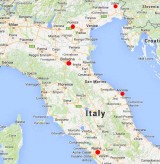
The slide show of this talk can be found on the PDF below. In this talk, we will focus on pronunciation at three levels – 1 sounds, 2 words, and 3 phrases. For each of these, we will look at some of the typical problems for Italian learners, and try out some fun activities for raising awareness of these.
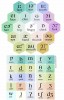
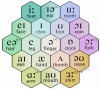
Here are the phonemic chart for vowels and consonants. See a video explanation of the vowels here. Click on the jpegs below for either the colour or black and white versions. If you prefer a version with no mention of alcoholic drinks, choose the files with ME at the end of the title.
See a video of this talk here. Each language has a repertoire of sounds which are used to make meaningful distinctions. When teaching the sounds of English, we need to keep that practical purpose in mind.
I'm delighted to be presenting at TESOL Spain this year on the topic of pronunciation. This year, we'll be looking at individual sounds and things we and our students can do with them, including experimenting and imagining, representing and exploring, and playing and communicating.
(pdf of slides below) Proverbial wisdom tells us that if you give someone a fish, they can eat for a day, but if you teach someone to fish, they can eat for a lifetime. It’s a message about the long-term value of learning new skills and becoming independent. A similar thing could be said about pronunciation and dictionaries.